
The enterprise runtime for the AI era.
One connected enterprise runtime for AI, automation, compliance, and operational intelligence.
Book a demo
See Enterprise Graph against your operating reality.
Your name and work email are enough. Anything else you share helps us tailor the demo.
Your demo request was sent. We will follow up by email.
Something went wrong. Try again or email [email protected].
Most enterprises cannot operate as one connected system.
Their reality is fragmented across systems, workflows, policies, spreadsheets, and tribal knowledge.
DIG (Declarative–Imperative Graph) is the methodology that models the enterprise as a single connected operational structure.
Enterprise Graph is the runtime built on top
A governed operational graph where AI agents and enterprise systems execute against shared operational reality instead of disconnected context
Making automation more trustworthy, compliance continuous, and enterprise KPIs governable in real time.
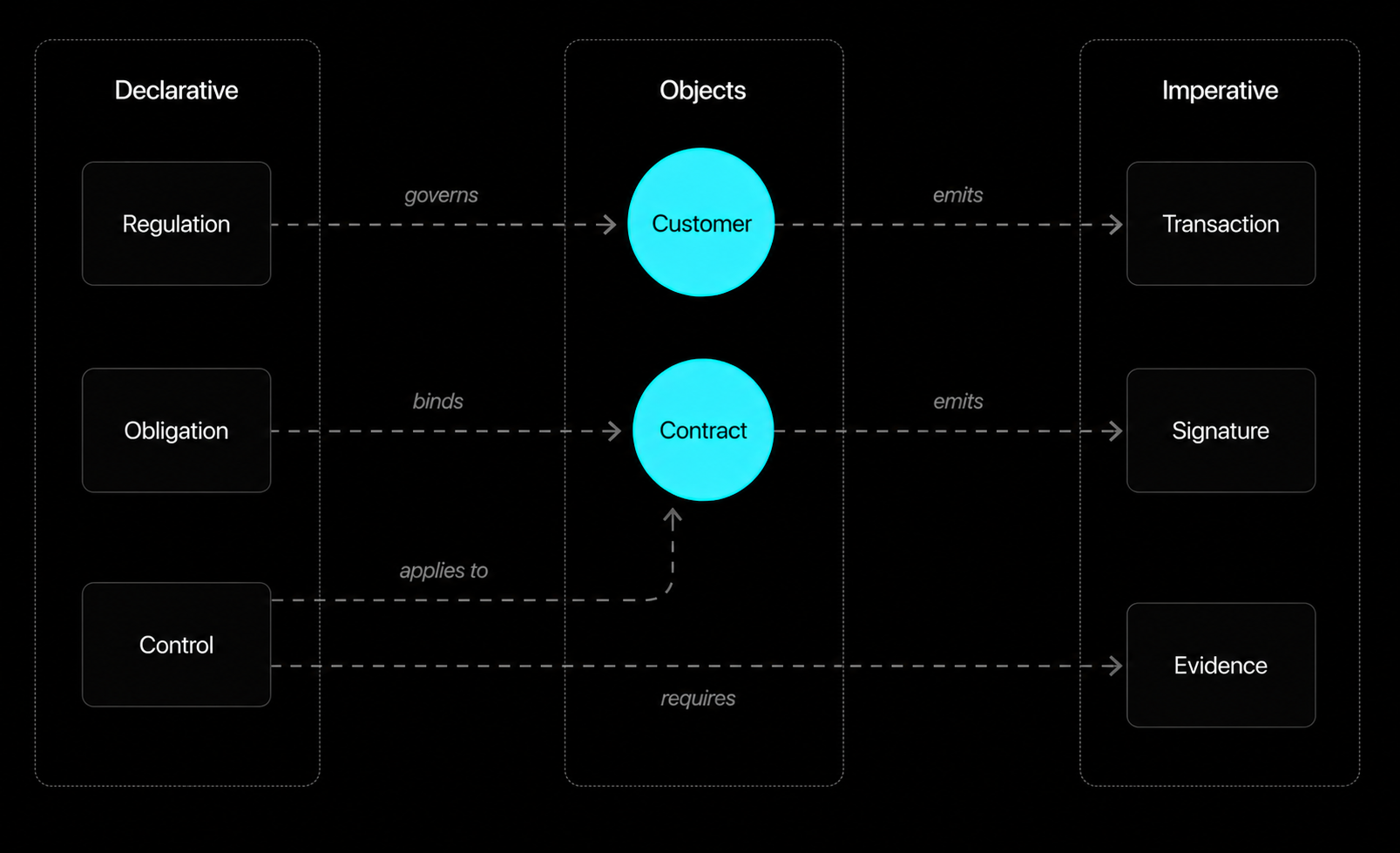
01 · Declarative-imperative duality
What must be true, and what is.
Every enterprise runs on two kinds of statement. Declarative: how things must, may, or must not be. Imperative: how things are, or were. The industry has historically kept them in separate tools. DIG models them in one graph, with the same primitives, mutually informing at the granularity of a single event.
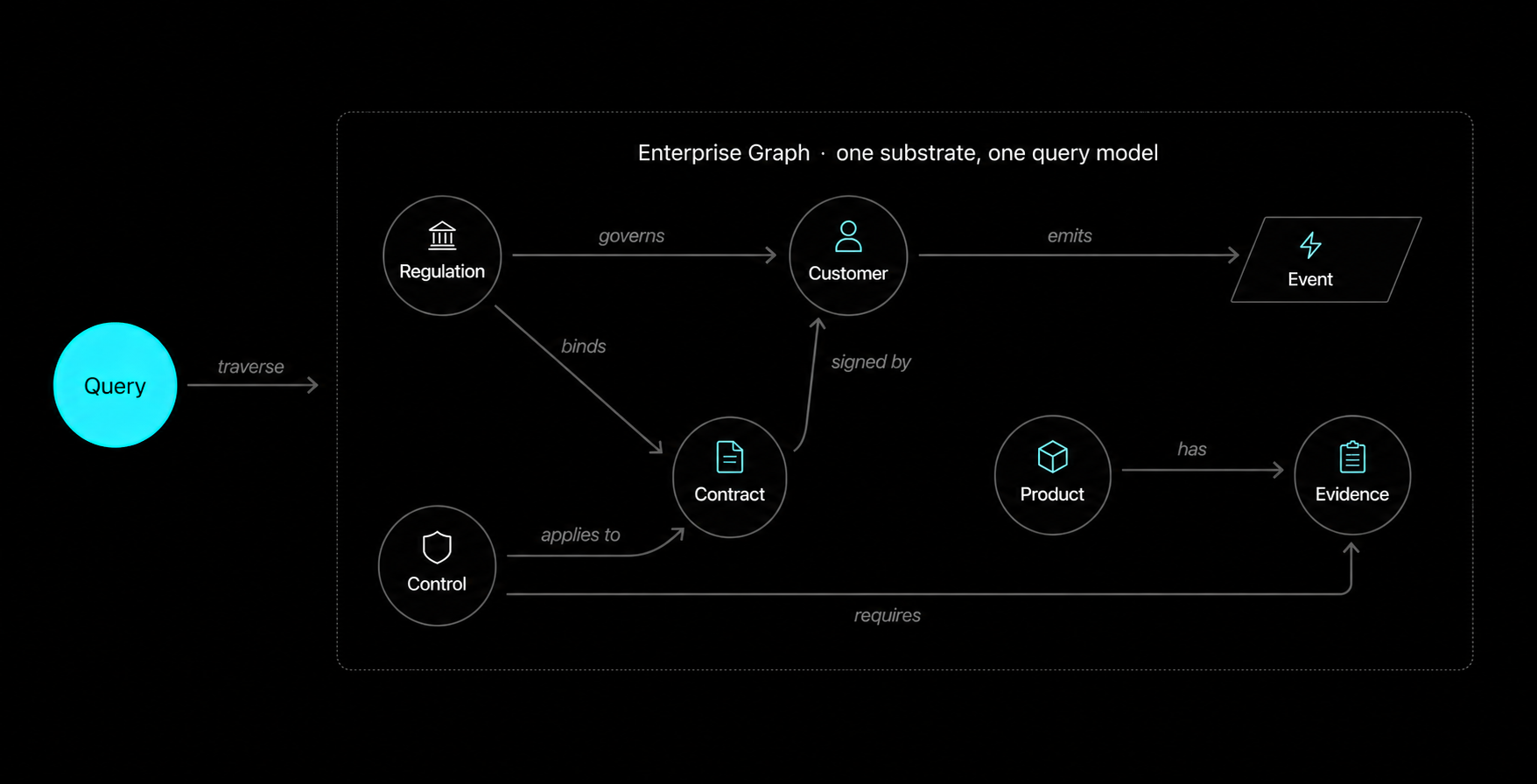
02 · Graph-native substrate
Stored as graph, queried as graph.
The questions DIG must answer are graph questions at the substrate level. Heterogeneous first-class entities, many-hop traversal in bounded work, relationships as full citizens, a single query model across structure, state, and history. Not a graph rendered from a warehouse. A graph stored and queried as graph.
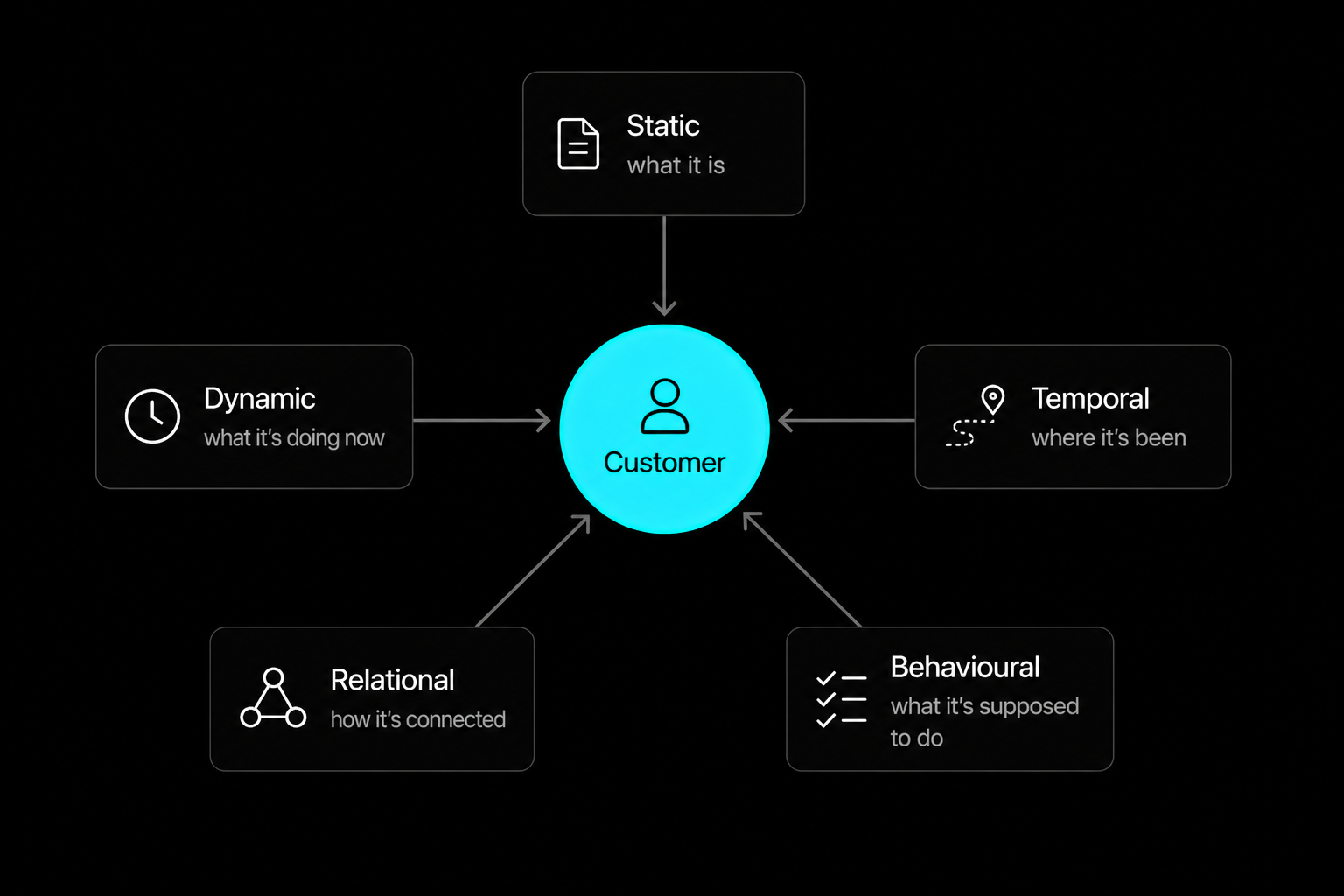
03 · High-dimensional objects
Objects as citizens, not labels.
A customer, a contract, a regulation, a product, a control: each becomes a state-bearing, constraint-aware, lifecycle-governed citizen of the graph. Five dimensions per object: static, dynamic, temporal, relational, behavioural. Compliance becomes a property the object continuously evaluates about itself.
Ahead, of Complexity. of Compliance. of Change.
What it gives you
Three capabilities, one substrate.
When declarations, trajectories, and citizens live in the same graph and are queried through the same semantics, the same substrate gives you three things at once.
Deterministic AI
AI conclusions you can defend.
Same question, same graph state, same answer. Every answer is a path; every path is replayable; every path is auditable.
Enterprise GraphContinuous compliance
Conformance, evaluated at query time.
Three independent scores per subject: rules satisfied, trajectory followed, object states admissible. Live, not quarterly.
Enterprise GraphLive cross-domain impact
When something changes, see everything else that changes.
A change in one domain propagates along typed dependencies to every trajectory, declaration, or object whose meaning depends on it.
Enterprise Graph
Read the paper
DIG: a universal modelling methodology for the AI era.
A 39-page methodology paper. The three moves, four reasoning classes, comparisons to adjacent software categories.